UNIST site map
- Admissions
-
Academics
- Colleges and Schools
-
Academic Affairs
- Academic Calendar
- Academic Curriculum
- Requirements for Graduation
- Browse Open Courses
- Undergraduate Administration
-
Graduate Academic Affairs
- Tuition Fee Payment
- Academic Leave of Absence/ Academic Return
- Voluntary Withdrawal/ Expulsion
- Change of Major
- Change of Degree Program/ Dropping of Degree Program
- Class Period/ Attendance Period/ Academic Year・Semester
- Course Registration
- Course Drop
- Attendance/ Grade/ Exam
- Credit Transfer/ Credit Carryover
- Academic Forms
- Education Support
-
Research/Industry
- Research Aims
- Research Findings
- Researcher Search
-
Research Organizations
- UNIST Multi-Interdisciplinary Institute
- IBS Research Groups
-
UNIST Labs
- Department of Mechanical Engineering
- School of Energy and Chemical Engineering
- Department of Civil
- Department of Materials Science and Engineering
- Department of Nuclear Engineering
- Department of Industrial Engineering
- Department of Design
- Department of Biomedical Engineering
- Department of Biological Sciences
- Department of Electrical Engineering
- Department of Computer Science and Engineering
- Department of Mathematical Sciences
- Department of Chemistry
- Department of Physics
- School of Business Administration
- Graduate School of Carbon Neutrality
- Graduate School of Artificial Intelligence
- Research Support
- University-Industry Relations
- Campus Life
- News Center
- About UNIST
-
etc
- UNIST Bulletin
- Work-Life Balance Support System
- UNIST Gender Equality Plan
- Faculty Invitation for Tenure Track
- Faculty Invitation for Non-Tenure Track
- Board Meeting Minutes
- University Council Meeting Minutes
- Administrative Service Charter
- Privacy Policy
- Copyright Policy
- Rejection of Unauthorized Email Collection
- Operation and Management Policy for Video Information Processing Devices
- Information Disclosure
SEARCH


Connection Points of Knowledge, Everything About UNIST
Try searching.
Recommended search terms


STUDENT


- portal
- U Academics Innovation Center
- Leadership Center
- Dormitory
- Academic Information Center
- International Students Support
- Browse Open Courses
- Course Registration
- Graduation Requirements for Graduation
- Academic Leave of Absence/ Academic Return
- Military Service
- Certificate Issuance
- Academic Calendar
- Scholarships
- Campus Map
- Campus Life Guidebook
- Health Care Center
- Human Rights Center
- portal
- Job Opening
- Announcement for Bid
- UNIST AI Services
- UNIST Daycare Center
- Sports Center
- UI Downloads
- Announcement
- Recruitment of Professors (Non-tenure)
- Faculty Invitation for Tenure Track
- UNIST Academic Information Center
- Office of Research Facilities and Training
- Office of Research Affairs
- Rule Management System
- Academic Calendar


This is a collection of menus necessary for UNIST students .
students
- portal
- U Academics Innovation Center
- Leadership Center
- Dormitory
- Academic Information Center
- International Students Support
- Browse Open Courses
- Course Registration
- Graduation Requirements for Graduation
- Academic Leave of Absence/ Academic Return
- Military Service
- Certificate Issuance
- Academic Calendar
- Scholarships
- Campus Map
- Campus Life Guidebook
- Health Care Center
- Human Rights Center


This is a collection of menus necessary for prospective UNIST Students .
prospective Students


This is a collection of menus necessary for UNIST Faculty & Staff .
Faculty & Staff
- portal
- Job Opening
- Announcement for Bid
- UNIST AI Services
- UNIST Daycare Center
- Sports Center
- UI Downloads
- Announcement
- Recruitment of Professors (Non-tenure)
- Faculty Invitation for Tenure Track
- UNIST Academic Information Center
- Office of Research Facilities and Training
- Office of Research Affairs
- Rule Management System
- Academic Calendar


NEWS CENTER
Discover not only Research Findings and event news, but also the diverse facets of UNIST presented by reporters and writers.
News Center

UNIST News
총 978건의 게시물이 있습니다.
There are a total of 978 posts.
-
Research
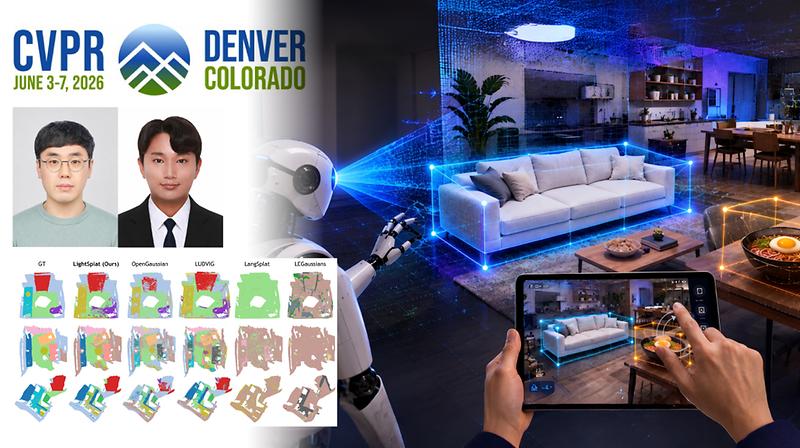
AI Achieves Rapid, Natural Language-Based 3D Object Recognition in Just Five SecondsUNIST Introduces LightSplat, a Fast and Lightweight 3D Scene Understanding System—Accepted for CVPR 2026Abstract Open-vocabulary 3D scene understanding enables users to segment novel objects in complex 3D environments through natural language. However, existing approaches remain slow, memory-intensive, and overly complex due to iterative optimization and dense per-Gaussian feature assignments. To address this, we propose LightSplat, a fast and memory-efficient training-free framework that injects compact 2-byte semantic indices into 3D representations from multi-view images. By assigning semantic indices only to salient regions and managing them with a lightweight index-feature mapping, LightSplat eliminates costly feature optimization and storage overhead. We further ensure semantic consistency and efficient inference via single-step clustering that links geometrically and semantically related masks in 3D. We evaluate our method on LERF-OVS, ScanNet, and DL3DV-OVS across complex indoor-outdoor scenes. As a result, LightSplat achieves state-of-the-art performance with up to 50-400x speedup and 64x lower memory, enabling scalable language-driven 3D understanding. A research team affiliated with UNIST has introduced a new AI system capable of instantly recognizing objects within 3D environments based solely on natural language descriptions. Whether in augmented reality interfaces or robotic systems, users can effortlessly specify target items—such as white sofas or tea in a glass—and receive precise localization within seconds. This approach is robust across diverse queries, from object details to complex spatial semantics, enabling fast and scalable performance for real-world applications. Led by Professor Kyungdon Joo from the UNIST Graduate School of Artificial Intelligence, the team developed ' LightSplat ,' a method that drastically reduces the memory and processing power required for open-vocabulary 3D scene understanding. Unlike previous systems that relied on complex, slow optimization processes, LightSplat assigns compact 2-byte labels to key regions in the scene. These labels enable rapid identification of objects based on natural language inputs. Traditional recognition methods depend on predefined object categories—such as chairs or doors—which limits their flexibility. In contrast, LightSplat can understand and locate highly specific objects described in everyday language. This makes it ideal for applications requiring quick, intuitive interaction, including robotics, augmented reality, and digital twins. By storing minimal semantic information linked to selected points within the scene, LightSplat reduces memory usage by 98%. Its streamlined approach allows the system to find and highlight objects in real time, matching human language with 3D space in just five seconds—50 to 400 times faster than previous techniques. Testing on datasets such as LERF-OVS, DL3DV-OVS, and ScanNet demonstrated LightSplat's capability to identify objects of varying sizes and complexities—from small items like eggs and cups to large objects like cars and furniture. On the ScanNet dataset, it achieved a segmentation accuracy score of 37.11, confirming reliable recognition performance. First author Jaehun Bang explained, "Speed, accuracy, and efficient memory use are all critical. Our technology makes open-vocabulary 3D recognition viable for real-world applications." Professor Joo added, "This system could power robots that understand natural commands instantly, facilitate AR content creation through simple text-based object selection, and support digital twin environments that accurately and efficiently reflect real-world scenes." The research has been accepted for presentation at the 2026 Conference on Computer Vision and Pattern Recognition (CVPR) in Denver, Colorado, from June 3 to 5, 2026. It was supported by the Institute of Information & Communications Technology Planning & Evaluation (IITP) and the UNIST Graduate School of Artificial Intelligence. Additional support came from initiatives including the AI Star Fellowship Program, the LG AI STAR Talent Development Program for Leading Large-Scale Generative AI Models in the Physical AI Domain, and the InnoCORE program of the Ministry of Science and ICT (MSIT). Journal Reference Jaehun Bang, Jinhyeok Kim, Minji Kim, et al., "LightSplat: Fast and Memory-Efficient Open-Vocabulary 3D Scene Understanding in Five Seconds," 26' CVPR, (2026).- 2026-06-12
- JooHyeon Heo
- 89
-
Research
UNIST Researchers Recognized for Data Distillation Excellence at ICLR 2026Professor Jae-Young Sim’s team has achieved a significant milestone with two papers accepted for presentation at the ICLR 2026.The research, conducted by Professor Jae-Young Sim and his team from the Graduate School of Artificial Intelligence at UNIST, has received notable recognition with two papers accepted for presentation at the International Conference on Learning Representations (ICLR) 2026—one of the most prestigious venues in machine learning research. Their work addresses one of the fundamental challenges in deploying artificial intelligence (AI) at scale: managing vast datasets—often comprising millions of images or extensive 3D scans—that demand enormous computational power and energy. To overcome this, the team developed advanced methods for dataset distillation, a process that synthesizes compact, highly representative datasets capable of training models effectively while dramatically reducing training time, computational costs, and energy consumption. ■ Advancing 3D Point Cloud Compression via Dataset Distillation A key challenge tackled by the team involves the compression of 3D point cloud data—crucial for applications such as autonomous vehicles and robotic perception. Unlike traditional images, point clouds are irregular and unordered, making them difficult to compress efficiently with conventional methods. Existing approaches often rely on storing a single high-resolution synthetic sample, which limits diversity and robustness within constrained memory budgets. To address this, Professor Sim and his team—comprising Dongwook Kim and Jae-Young Yim—developed a novel framework tailored specifically for 3D data. Instead of a single representative sample, the method employs multiple low-resolution anchor point clouds. These anchors are then smoothly transformed into a variety of synthetic shapes through a learnable shape-morphing mechanism, enabling the generation of diverse, high-quality 3D samples within a limited memory footprint. To preserve structural fidelity, the researchers introduced the Uniformity-Aware Matching Loss function, which maintains the geometric relationships inherent in the original data. Extensive evaluations across multiple benchmark datasets—including ModelNet10, ModelNet40, and ShapeNet—demonstrated that this approach surpasses existing methods, achieving remarkable accuracy even under severe compression. Notably, in the most constrained scenario—using only a single synthetic sample per class—the recognition accuracy increased from 35.9% to 87.7%, illustrating the method's efficiency and robustness. ■ Enabling Continual Learning through Dynamic Dataset Updating Beyond static data compression, the team addressed the challenge of continuous learning in dynamic environments—where new data continually arrives, and models must adapt without losing prior knowledge. Traditional dataset distillation approaches often require creating separate synthetic datasets for each new batch, leading to increased storage and computational costs. More critically, repeatedly updating a fixed synthetic dataset risks Catastrophic Forgetting , where previously learned information is overwritten. To tackle this, the researchers developed an Asymmetric Synthetic Data Update strategy. This innovative approach dynamically adjusts the influence of each synthetic sample during updates, allowing the dataset to incorporate new information while retaining past knowledge. A bi-level meta-learning framework automatically determines optimal per-sample update rates, balancing stability and plasticity. This enables the synthetic dataset to evolve continuously, effectively mitigating forgetting and maintaining high performance over time. Experimental results demonstrate that this method facilitates efficient lifelong learning within fixed storage capacities, making it highly suitable for real-world applications, such as autonomous vehicles, robotics, and edge devices. Professor Sim remarked, “Our work exemplifies how intelligent data synthesis and adaptive updating strategies can make AI systems more resource-efficient, scalable, and capable of lifelong learning. We believe these advancements will accelerate the deployment of smarter, more sustainable AI in diverse real-world environments.” The study was led by Minyoung Oh, serving as the first author.- 2026-06-11
- JooHyeon Heo
- 457
-
Research
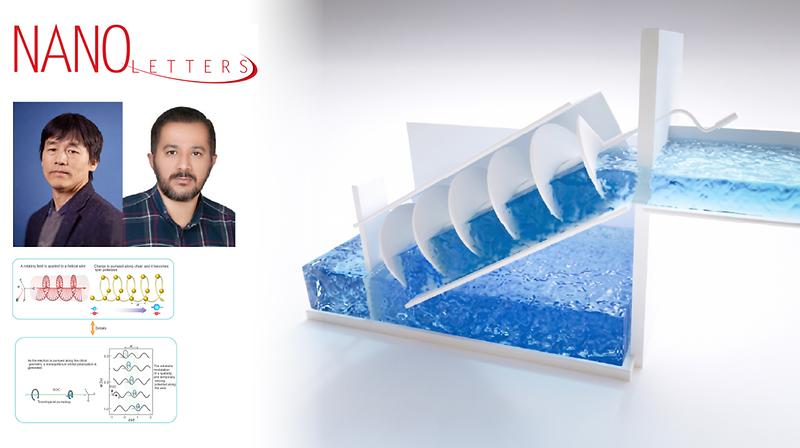
Spiral Nanowires Serve as Quantum Pumps for Quantized Electron TransportThe findings of this research have been published in Nano Letters on May 13, 2026.
Abstract Quantized charge pumping in one-dimensional chiral wires has been widely studied in the context of topological physics in (1 + 1)-dimensional synthetic space, yet the role of orbital and spin degrees of freedom remains largely unexplored. Here, we show that topological charge pumping in insulating chiral systems intrinsically generates orbital and spin polarization, providing a new perspective on spin-selective transport in chiral materials, often associated with chirality-induced spin selectivity. Using time-dependent Schrödinger dynamics of multiorbital tight-binding models driven by circularly polarized light, we identify two key results. First, the screw-like geometry enables a single-parameter topological charge pumping. Second, while the energy gap remains open throughout the pumping cycle, Berry phase driven dynamics induces nonequilibrium orbital polarization. Through spin–orbit coupling, this orbital response is partially converted into spin polarization. By analogy between synthetic (1 + 1)- and two-dimensional topological insulators, we suggest that nontrivial spin–orbital dynamics may accompany anomalous quantum charge Hall states. A new theoretical study has demonstrated that a spiral-shaped nanowire can function as a quantum pump—transferring electrons in precise, quantized amounts. This discovery reveals a novel approach to controlling charge flow at the nanoscale, grounded in the topological properties of the material. Led by Professor Noejung Park of the Department of Physics at UNIST, in collaboration with researchers at Pennsylvania State University, the team shows that a one-dimensional, screw-like chiral material can generate a topological charge pump. During this process, the system also produces orbital angular momentum and spin polarization, unveiling new connections between topology and quantum transport. The concept draws inspiration from the ancient Greek Archimedean screw, a device used to lift water through rotation. In the quantum realm, a similar structure—an electron traveling along a spiral nanowire—can induce directed charge flow by cyclically modulating its quantum states. Unlike conventional currents driven by voltage, this effect involves gradually varying system parameters to achieve a quantized transfer of electrons with each cycle, fundamentally linked to the topological nature of the material. First proposed by Nobel laureate David Thouless in 1983, topological charge pumping enables electrons to move in discrete steps without applying an external voltage. While this phenomenon has been realized in various engineered systems, the current work demonstrates that a simple modulation of the electric field's direction in a chiral nanowire is sufficient to produce quantized charge transport. This insight simplifies the pathway toward practical topological devices, eliminating the need for multiple control parameters previously deemed necessary. Using advanced time-dependent simulations of multiorbital models and density functional theory calculations, the researchers examined electrons in spiral hydrocarbons and selenium nanowires. They found that as electrons are pumped along the wire, orbital angular momentum becomes dynamically polarized. In selenium nanowires, a portion of this orbital polarization converts into spin polarization via spin-orbit coupling, establishing a topological mechanism akin to the chirality-induced spin selectivity (CISS) effect. Using advanced time-dependent simulations of multiorbital models and density functional theory calculations, the team examined electrons in spiral hydrocarbons and selenium nanowires. They observed that as electrons are pumped along the wire, orbital angular momentum becomes dynamically polarized. In selenium nanowires, part of this orbital polarization converts into spin polarization via spin-orbit coupling, creating a topological mechanism similar to the chirality-induced spin selectivity (CISS) effect. Professor Park notes, "This work shows that charge, orbital, and spin behaviors are interconnected through a topological process in chiral nanowires. It opens pathways to control these properties electrically at the nanoscale." Published in the May 2026 issue of Nano Letters , the study involved Dr. Esmaeil Taghizadeh Sisakht from UNIST. It was supported by the National Research Foundation of Korea (NRF), the Ministry of Science and ICT (MSIT), the Korea Institute for Advancement of Technology (KIAT), and the Ministry of Trade, Industry and Energy (MOTIE). Journal Reference Esmaeil Taghizadeh Sisakht, Uiseok Jeong, Xiao Jiang, et al ., “Spin and Orbital Angular Momentum Polarization in Thouless Topological Charge Pumping,” Nano Letters, (2026).- 2026-06-09
- JooHyeon Heo
- 2191
-
Research
New Study Unveils Precise Calibration Method for Event Cameras in Autonomous SystemsSelected as a Highlight of the 2026 CVPR, this study pushes forward the capabilities of high-speed sensing in dynamic environments.Abstract The conventional checkerboard-based calibration for standard cameras faces fundamental limitations when applied to bio-inspired event cameras. Specifically, this stems from two challenges: (i) Events are triggered asynchronously at different timestamps along motion trajectories. If we accumulate them directly on the image plane, it causes temporal misalignment and produces blurred edges. (ii) Checkerboard corners on event cameras show near-zero event occurrence at the corner itself. This hinders reliable corner localization and makes calibration difficult. To address these issues, we present a novel calibration framework that directly detects checkerboard corners from event data without learning-based grayscale image reconstruction. We first mathematically analyze the absence of events at corner points. Based on this fact, we then leverage edge-driven event cues to initialize corner positions. Using the nearzero event occurrence at checkerboard corners, we gradually refine the estimated corner toward low event-density regions, achieving sub-pixel accuracy. Furthermore, we extend the corner detection to fiducial markers such as AprilTag, resulting in reliable detection even under partial visibility or occlusion. Evaluations on self-collected and public data demonstrate reliable checkerboard corner detection and stable camera calibration. A research team affiliated with UNIST has introduced a new calibration technique for event cameras—an essential sensor for high-speed robotics and autonomous vehicles. Unlike conventional methods, this approach uses standard checkerboard patterns to calibrate the sensors directly from event data, eliminating the need for image reconstruction. Event cameras detect only changes in brightness at individual pixels, enabling rapid perception in challenging conditions, such as low light or fast motion. However, calibrating these sensors—particularly with common checkerboard targets—has been problematic because the key points at the intersections of black and white squares rarely produce detectable events. Led by Professor Kyungdon Joo from the UNIST Graduate School of Artificial Intelligence, the team developed a computer vision approach that bypasses this challenge. Instead of locating checkerboard corners directly within event data, the method first detects the pattern's boundary lines. It then identifies the corners as intersections where these lines meet and where minimal activity occurs—since brightness changes cancel out at intersections. This insight, grounded in the mathematical behavior of event signals, enables precise corner detection without converting event data into traditional images. The team also improved the clarity of the detected grid. Because event signals are recorded asynchronously across pixels, slight movements can cause the pattern to blur. Their technique aligns and refines these signals, reconstructing sharp grid lines and significantly enhancing calibration accuracy. Furthermore, the method extends to AprilTags—square fiducial markers similar to QR codes used for localization. It can identify and decode these tags solely from event data, even when some are partially obscured or outside the camera's field of view. First author Taehun Ryu explains, “Previous methods had to convert event data into grayscale images to find corners, which could introduce blurring and errors. Our approach directly extracts reference points from raw signals, greatly improving calibration precision.” Professor Joo highlights the broader significance, “Accurate camera calibration is fundamental to many vision systems. Our work paves the way for deploying event cameras in real-world robots and vehicles.” The study has been selected as a Highlight at the 2026 Conference on Computer Vision and Pattern Recognition (CVPR), scheduled for June 3–7 in Denver, USA. Only about 3.5% of submissions earn this recognition, which honors outstanding contributions to the field. The research was supported by the Institute of Information & Communications Technology Planning & Evaluation (IITP), the Ministry of Science and ICT (MSIT), the National Research Foundation of Korea (NRF), and UNIST's Graduate School of Artificial Intelligence. Additional support came from projects including the Development of AI Bots Collaboration Platform and Self-organizing and the Geometric and Physical Commonsense Reasoning based Behavior Intelligence for Embodied AI . Journal Reference Taehun Ryu, Changwoo Kang, and Kyungdon Joo, "From Corners to Fiducial Tags: Revisiting Checkerboard Calibration for Event Cameras," 26 CVPR, (2026).- 2026-06-08
- JooHyeon Heo
- 2326
-
Research
New High-Efficiency Wireless Charging for Implantable Medical DevicesTheir findings have been published in IEEE TVLSI on April 29, 2026.Abstract This article presents a single-input–dual-output (SIDO) wireless power transfer (WPT) system that maintains high link efficiency across both heavy and light load conditions. Conventional SIDO architectures employ a fixed matching network, which leads to significant efficiency degradation when the load changes. To address this limitation, the proposed system classifies the two outputs into heavy-load and light-load domains and employs dedicated matching networks optimized for each operating condition, thereby maximizing link efficiency during charging of either load. To minimize the power overhead of mode switching while enabling single-stage AC–DC regulation, a charging-phase controller, a full/half-window mode controller, and an adaptive window generator are employed. Furthermore, an active rectifier with a slowdown unit cell (SUC)-based on/off controller (SOOC) is proposed to improve power conversion efficiency (PCE). In addition, an early turn-on switching (ETS) is implemented to achieve higher PCE compared to conventional zero-voltage switching (ZVS). Fabricated in a 0.18- μ m BCD process, the system is implemented as two chips, a standalone rectifier for accurate PCE measurement and a SIDO integrating the same rectifier. The SIDO demonstrates stable full/half-window operation without multiple pulsing. Measured link efficiency reaches 94.4% at 3mA and 92.7% at 30mA at a coupling coefficient k = 0.2, confirming the effectiveness of the load-optimized matching. The rectifier achieves 94.5% peak PCE and maintains above 92.3% PCE across a 2.5–5.0V input range. A new wireless charging technology promises to enhance the safety and longevity of implantable medical devices, such as pacemakers and neural stimulators. Led by Professor Franklin Bien of the Department of Electrical Engineering, the research team developed a system that employs load-specific matching networks and adaptive control to optimize power delivery. Implantable devices often incorporate circuits with varying power demands—high-current circuits for stimulation and low-current circuits for data processing. Traditional wireless chargers rely on fixed configurations, which can lead to inefficiencies and heat buildup, potentially damaging surrounding tissue. The new system detects changes in load and switches between dedicated matching networks tailored for high and low power conditions, thereby optimizing energy transfer. Furthermore, the team improved the efficiency of the rectifier circuit that converts received alternating current (AC) into direct current (DC). By precisely controlling switching points during power conversion, they minimized energy loss and enhanced overall performance. Experimental results demonstrated a link efficiency of 94.4% at a low load of 3mA and 92.7% at a high load of 30mA. The active rectifier achieved a peak power conversion efficiency of up to 94.5%, maintaining above 92% even as input voltage varied from 2.5V to 5V. The research team anticipates that this technology will extend the operational lifespan of implantable devices, reducing the need for frequent surgical replacements and associated risks. It also holds promise for application in wearable electronics and compact Internet of Things (IoT) devices that require reliable, low-loss wireless power. The findings of this research were published online in the IEEE Transactions on Very Large Scale Integration (VLSI) Systems on April 29, 2026. The study has been s upported by the Ministry of Science and ICT (MSIT) and the Institute for Information & Communications Technology Planning & Evaluation (IITP). Journal Reference Sungmin Shin, Seongbin Kwon, Geonwoo Baek, et al ., “A Single-Input Dual-Output Wireless Power Transfer System With Load-Optimized Matching Network,” IEEE TVLSI. , (2026).- 2026-06-05
- JooHyeon Heo
- 2603
-
Research
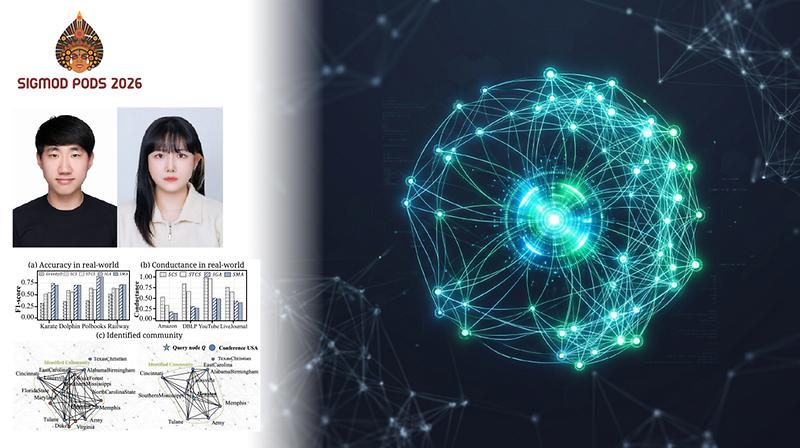
Novel Network Analysis Algorithm for Targeted Community Detection Without Full Data AccessAccepted at SIGMOD 2026, this work offers precise group detection around individuals, with key applications in marketing, fraud detection, and biological research.Abstract With the proliferation of social networks, identifying meaningful community structures efficiently is essential for analyzing complex interactions. This paper introduces Local Sketch Modularity (LSM), a novel modularity that measures community quality without relying on the entire structural information of the network, enabling a more targeted and practical approach to find the query-centric community. We validate the efficacy of the proposed modularity LSM through theoretical analyses, showing robustness against the free-rider effect. We further formulate the Local Modularity Optimization for Size-Constrained Community Search (LMSC) problem, which leverages LSM to identify the query-centric community without requiring knowledge of the entire graph. We prove that LMSC is NP-hard and propose two efficient and effective algorithms. Extensive experiments on real-world networks demonstrate both the effectiveness and efficiency of the proposed method, confirming its applicability for large-scale network analysis. A research team led by Professor JungHoon Kim from the Department of Computer Science and Engineering at UNIST has introduced an innovative network analysis algorithm capable of identifying relevant communities around a target node without requiring access to the entire network. This advancement has the potential to enhance targeted marketing, improve fraud detection, and generate new insights in biological network research. Traditional community detection tools often struggle with large-scale data or are limited by privacy restrictions that prevent access to full network information. They tend to include unrelated nodes or overlook tightly connected groups around a specific target. The new method addresses these challenges by focusing solely on the neighborhood of a designated node, expanding the community incrementally while adhering to a predefined size. Starting from the target node—such as a potential customer, a suspicious account, or a biological molecule—the algorithm examines neighboring candidates and assesses whether adding each one improves the overall coherence of the group. It balances internal connectivity with external separation, preventing the community from becoming excessively large. To capture subtle relationships, it also considers small, tightly linked subgroups that might otherwise be missed. Testing on real-world networks shows this approach significantly outperforms existing methods, with F1 scores up to 1.39 times higher and ARI scores up to 5.95 times higher. These results demonstrate more accurate detection of relevant communities while reducing false positives. “In many real-world situations, obtaining full network data isn't feasible, and the target community size is often fixed,” said Professor Kim. “Our method quickly identifies meaningful groups around a specific node, making it applicable to areas like customer segmentation, fraud prevention, and biological research.” Supported by the National Research Foundation of Korea (NRF), the study was led by first author Dahee Kim. Their work has been accepted for presentation at the ACM Special Interest Group on Management of Data (SIGMOD) 2026, scheduled to take place in Bengaluru, India, from May 31 to June 5, 2026. As one of the most respected conferences in data management, SIGMOD offers a platform for pioneering research in the field. Journal Reference Dahee Kim, Taejoon Han, Kaiyu Feng, et al., "LMSC: Local Sketch Modularity Optimization for Size-Constrained Community Search in Networks," '26 SIGMOD , (2026).- 2026-06-04
- JooHyeon Heo
- 372
-
Research
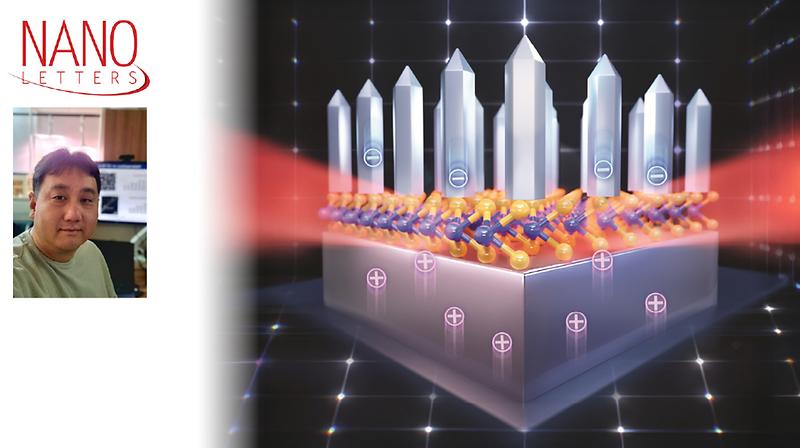
UNIST Unveils Transfer-Free Method for 2D Semiconductor LED ProductionTheir findings have been featured as Supplementary Cover of Nano Letters and published online on April 21, 2026.Abstract We investigated an epitaxial strategy for fabricating MoS2 light-emitting diodes (LEDs). A full-coverage MoS2 active layer was grown on p-type GaN, and n-type ZnO nanorods were then vertically aligned on the MoS2 to form ap–n junction with negligible damage to the MoS2. All materials have nearly matched hexagonal structures, enabling single-crystal alignment. Although the continuous MoS2 film formed multiple layers (MLs), the ZnO/MoS2/GaN heterostructure yielded favorable optical characteristics of the ML-MoS2, including internal quantum efficiency comparable to that of the single-layer MoS2. The ZnO/MoS2/GaN LED exhibited stable A and B exciton emissions, which implies direct bandgap transition with spin–orbit coupling. Without mechanically exfoliated or transferred 2D films, this epitaxial approach satisfies the key requirements for fabricating 2D-based optoelectronic and quantum light sources. The strength of epitaxy, such as large-scale scalability and multiple quantum-well formation, will further advance 2D optoelectronics, making them more practical and efficient. A research team, affiliated with UNIST has demonstrated a new way to produce light-emitting diodes (LEDs) using atomically thin layers of molybdenum disulfide (MoS2). By growing the material directly on a substrate, they eliminate the need for transferring fragile 2D films—a step that has limited previous efforts to scale and uniformity. Led by Professor Kunook Chung from the Graduate School of Semiconductor Materials and Devices Engineering, the team developed a process to grow high-quality MoS₂ directly on gallium nitride (GaN), then add zinc oxide (ZnO) nanorods on top to form a complete p–n junction. This approach simplifies manufacturing and results in consistent, scalable devices. MoS2, a 2D semiconductor capable of emitting visible light at just a few atomic layers, has long promised applications in quantum light sources and integrated photonics. However, traditional fabrication methods involve synthesizing the material separately and then transferring it onto a substrate, which often introduces defects, contamination, and variability. By growing MoS2 directly on GaN, the team avoided these issues. The process begins with depositing GaN, then carefully epitaxially growing MoS2 at high temperature. The ZnO nanorods are subsequently grown vertically on the MoS₂ layer, creating a well-aligned, high-quality heterostructure. These devices emit red light at wavelengths of 630 nm and 705 nm, confirmed through optical testing. The emission features quantum effects like spin–orbit coupling, suggesting potential for quantum photonic applications. Professor Chung explained, “Transfer processes have limited the scalability of 2D LEDs. Our method shows that direct growth can produce uniform, high-quality devices—similar to traditional semiconductor fabrication. This opens the door to large-scale, practical 2D optoelectronics.” He further added, “Further improvements in efficiency could lead to applications such as micro-LED displays or quantum light sources, especially in the red spectrum.” The findings of this research have been featured as the Supplementary Cover of Nano Letters on April 21, 2026. The study has been supported by the National Research Foundation of Korea (NRF), the Ministry of Science and ICT (MSIT), the Korea Institute for Advancement of Technology (KIAT), and the Ministry of Trade, Industry, and Resources (MOTIE). Journal Reference Imasda Rahmatulloh, Daryll JC Dalayoan, Asad Ali, et al ., “Epitaxial n-ZnO/MoS2/p-GaN Heterostructure Light-Emitting Diodes,” Nano Letters, (2026).- 2026-06-02
- JooHyeon Heo
- 2728
-
Research
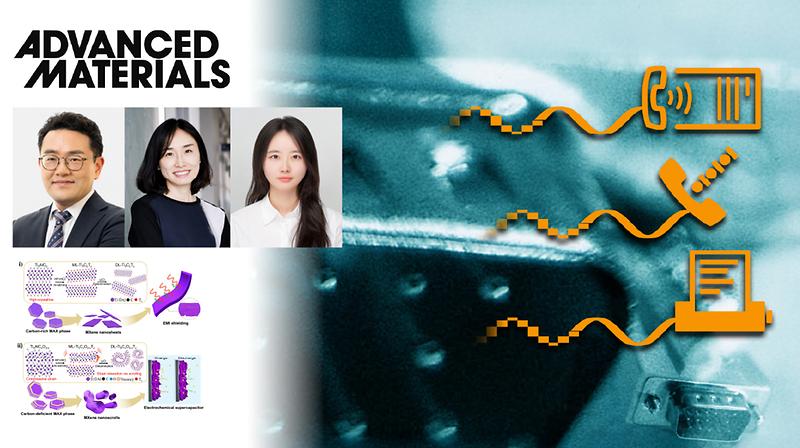
Breakthrough Chameleon MXene Promises Advanced 6G Communication and Next-Gen BatteriesPublished in Adv. Mater., the study marks a significant step forward in the controlled synthesis of MXene, opening new possibilities for high-performance, adaptable electronic materials.Abstract Device-level performance in MXenes is dictated by architecture—planar nanosheets are optimal for electromagnetic interference (EMI) shielding, while scrolled structures enhance ion transport for energy storage—particularly when morphology is programmed at synthesis. Whether such architectures can be deterministically encoded through precursor stoichiometry remains unresolved. Here, we demonstrate that precise carbon stoichiometry control in Ti3AlCxO2-x MAX phases tunes internal lattice strain and thereby directs the emergent MXene architecture. Carbon-rich precursors (x = 1.94) yield strain-relieved, high-crystalline nanosheets with metallic conductivity (∼23 300 S cm−1), enabling ultrathin films with record-high EMI shielding performances across 8 µm) and robust W-band retention after 5,000 bending cycles (r = 2.5 mm). In contrast, carbon-deficient precursors (x = 1.71) introduce lattice compression and oxygen substitution, triggering spontaneous scrolling upon delamination. The resulting nanoscrolls offer exceptional ion accessibility, achieving 657 F g−1 at 2 mV s−1 with 99.4% retention over 12 000 cycles. This stoichiometry-programmed approach establishes a synthesis-stage lever linking MAX chemistry to MXene architecture and function, enabling application-specific architecture design within established MAX/MXene synthesis and solution-processing workflows for next-generation electronics and energy storage. Researchers at UNIST have discovered a simple way to control MXene's structure by adjusting the carbon content in its precursor. This breakthrough enables the creation of tailored MXene materials optimized for high-frequency electromagnetic interference (EMI) shielding and rapid energy storage. MXene, a two-dimensional material composed of metal and carbon layers, is celebrated for its excellent electrical conductivity and adaptability. Its potential spans batteries, sensors, and flexible electronics. With the rise of 6G technology and advanced radar systems, shielding devices against high-frequency interference has become critical. At the same time, the demand for quick, reliable energy storage continues to grow. Led by Professor Soon-Yong Kwon from the Graduate School of Semiconductor Materials and Devices Engineering and Professor EunMi Choi from the Department of Electrical Engineering, the team showed that changing the carbon content in MAX precursors influences how MXene forms during synthesis. This control method results in two distinctly different structures. When using carbon-rich precursors, the process yields flat, highly crystalline nanosheets that exhibit excellent electrical conductivity, effective electromagnetic shielding at 100 GHz, and maintain flexibility and durability under repeated bending. Conversely, employing carbon-deficient precursors induces the spontaneous formation of nanoscrolls, which significantly enhance ion transport. These nanoscroll structures enable high-capacity energy storage, achieving a capacitance of 657 F/g and a cycle life exceeding 12,000 cycles. This work confirms that simple adjustments to precursor composition can produce MXene structures tailored for specific applications—flat sheets for shielding and scrolls for energy storage—within a streamlined process. First author Jaeeun Park explains, “We showed that flat MXene sheets are ideal for electromagnetic shielding, while scroll structures are better suited for energy storage. By controlling the precursor, we can design the material for different functions without changing the synthesis method.” Professor Kwon adds, "Last year, we enhanced MXene's conductivity and broadband shielding through nitrogen doping. Now, we've demonstrated how to design the material's shape from the start. The ultra-thin, flexible MXene performs well at 100 GHz and withstands bending, making it a promising lightweight, flexible shield for future 6G and radar systems." Supported by the Ministry of Science and ICT (MSIT) and the National Research Foundation of Korea (NRF), the study was published in Advanced Materials on May 18, 2026. Journal Reference Jaeeun Park, Ju-Hyoung Han, Yujin Chae, et al ., “Stoichiometry-Programmed MXenes via Precursor Engineering for High-Performance EMI Shielding and Energy Storage,” Adv. Mater ., (2026).- 2026-06-01
- JooHyeon Heo
- 2945
-
Research
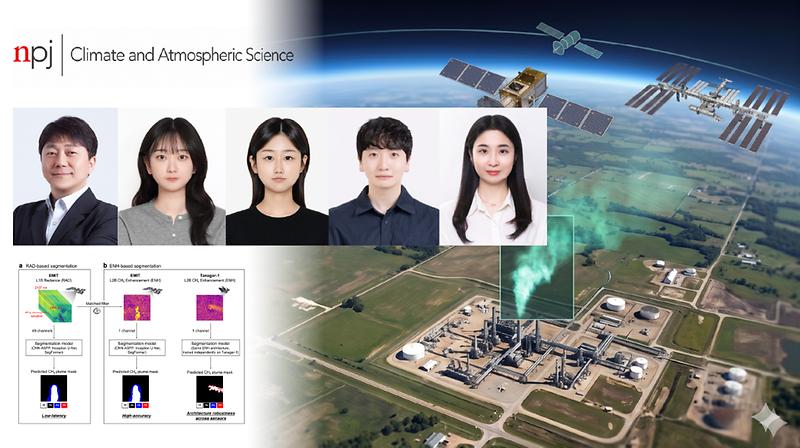
AI-Driven Satellite Detects Methane—84 Times More Potent Than CO2—Faster and More PreciseTheir findings were published in npj Climate and Atmospheric Science on March 25, 2026.Abstract Methane (CH4) is a dominant driver of near-term warming, yet global emission monitoring remains constrained by slow processing and large uncertainties. Hyperspectral spectrometers enable sensitive detection of CH4 plumes, but the relative advantages of enhancement-based (ENH) and radiance-based (RAD) approaches have not been systematically evaluated. Here we introduce a dual-path deep-learning framework that systematically compares both approaches using globally distributed, expert-validated CH4 plume datasets from EMIT and Tanager-1. The ENH models exhibit higher segmentation accuracy across plume scales, whereas the RAD models, operating directly on 49 shortwave-infrared channels, avoid computationally expensive preprocessing (eg, matched filtering) and enable rapid screening. Both pathways markedly reduce labor-intensive workflows and latency relative to traditional processing while maintaining competitive performance by utilizing deep learning. Explainable AI analyzes demonstrate that the models learn spatial-spectral features consistent with CH4 absorption structure and plume morphology, providing evidence of scientific validity. Cross-sensor evaluation demonstrates architectural robustness across EMIT and Tanager-1, establishing a physics-grounded framework adaptable across hyperspectral sensors. Methane (CH4) is a powerful greenhouse gas—84 times more potent than carbon dioxide over 20 years. Quickly identifying leaks is crucial, but current methods rely on slow, manual analysis of satellite images. Researchers at UNIST have created an AI-based system that automates methane plume detection, making monitoring faster and more precise. Led by Professor Jungho Im from the Department of Civil, Urban, Earth, and Environmental Engineering, the team built a deep learning model to identify methane leaks in satellite imagery. They tested different data types and modeling techniques to determine the most effective approach for global deployment. Hyperspectral satellites capture reflected sunlight across hundreds of narrow wavelengths, revealing detailed surface information. The team trained their models on data from NASA's EMIT satellite, which orbits the International Space Station. The models detect methane by recognizing specific infrared wavelengths absorbed by the gas—clear indicators of leaks. The system successfully identified methane emissions from diverse sources, including oil and gas facilities, waste sites, and coal mines across regions such as Turkmenistan, Algeria, and the US The analysis revealed that the AI system does not merely recognize visual patterns; It interprets physical signals such as absorption features and plume shapes consistent with real-world physics. They tested three deep learning architectures—CNN-ASPP, Inception U-Net, and SegFormer—using two data types: raw radiance and processed data that highlights methane concentration. Models trained on the enhanced data performed better overall. But models trained on raw data responded faster, making them useful for quick scans. Applying these models to Tanager-1 satellite data—commercial hyperspectral imagery—yield similar results, demonstrating the approach's versatility across different sensors. First authors Seyoung Yang and Yejin Kim played key roles in this work. The models work across various resolutions and conditions, relying on physical principles to quickly flag large leaks for further investigation. Professor Im emphasized the importance, “Fast leak detection is essential for reducing methane emissions. Traditional methods are slow and require experts. By combining hyperspectral data with AI, we can identify potential trouble spots in real time and strengthen global monitoring efforts.” Supported by the Ministry of Environment and the Ministry of Education, this research was published in npj Climate and Atmospheric Science on March 25, 2026. Journal Reference Seyoung Yang, Yejin Kim, Minki Choo, et al ., “Beyond localized methane plume detection: a dual-path deep learning framework for sensor-agnostic global hyperspectral methane plume monitoring,” npj Clim. Atmos. Sci., (2026).- 2026-06-01
- JooHyeon Heo
- 2322