
People

People
Professor
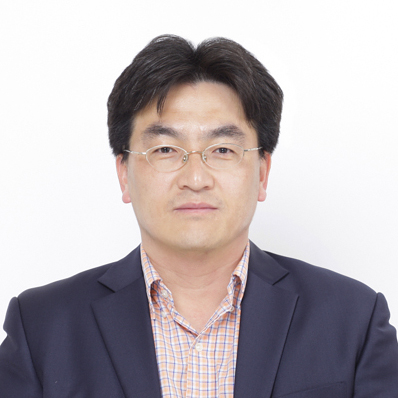
Kyujin Kwak곽규진
- 위치108) 501-5
- 메일kkwak@unist.ac.kr
- 전화052-217-2139
Current Research Interests
- Research Interests:
- Computational Fluid Dynamics. Astrophysical and Laboratory Plasma. Hydrodynamics with Radiation, Nuclear, Atomic, and Molecular Reactions. Multi-messenger astronomy: Gravitational Wave and Neutrino Astronomy. AI for Astronomical Data
- Research Keywords:
- Computational Astrophysics, Supercomputing, Plasma, Astro-Chemistry, Multi-Messenger Astronomy, Machine Learning
- Supercomputers have been used to simulate various astrophysical phenomena, explaining physical processes behind observations and predicting new observables. We use supercomputer simulations to study following astrophysical phenomena:
- (1) Astrophysical plasma in the interstellar/intergalactic medium with non-equilibrium ionization calculations
- (2) Turbulence in relativistic flows with and without magnetic field
- (3) Nuclear burning within the stars and on the surface of compact stars such as white dwarfs and neutron stars.
- We also use numerical simulations of radiative transfer for the astrophysical phenomena such as gamma-ray bursts and supernovae. Our interest also includes molecular reactions occurring in various astro-physical and chemical environments.
- Ongoing Research Topics:
- Non-equilibrium ionization simulations of astrophysical plasma in interstellar and intergalactic medium
- Numerical relativity: hydrodynamic and magneto-hydrodynamic simulations of turbulence in relativistic flows
- Computational nuclear astrophysics for the rare isotope accelerator experiments
- Relativistic radiative transfer for the astrophysical applications (e.g., Gamma-Ray Bursts and Active Galactic Nuclei)
- Non-equilibrium molecular reaction simulations
- Gravitational wave detector: noise hunting to increase detector sensitivity
- Neutrino astronomy: searching for new astrophysical sources
- Applying machine learning to astrophysical big data
Biographical Sketch
- Career and Education
- 2021~Present: Associate Professor, UNIST
- 2012~2021: Assistant Professor, UNIST
- 2012: Post-doc., Korea Astronomy & Space Science Institute (KASI)
- 2007~2012: Post-doc., Univ. of Georgia, USA
- 2007: PhD. Physics & Astronomy, State Univ. of New York at Stony Brook, USA
- 1999: MS. Theoretical Nuclear Physics, Seoul National University
- 1997: B. S. Physics, Seoul National University
- Academic Membership
- 2013~Present: Member, Korean Astronomical Society
- 2012~Present: Member, Korean Physical Society
- 2004~Present: Member, American Astronomical Society
Selected Publications
- 1. Neutrinos from Carbon-burning Red Supergiants and Their Detectability, Seong, Gwangeon; Kwak, Kyujin; Ryu, Dongsu; Shin, Bok-Kyun, 2025, Astrophysical Journal, v.981, no.1, pp.86
- 2. GWTC-3: Compact Binary Coalescences Observed by LIGO and Virgo during the Second Part of the Third Observing Run, Ligo-Virgo-Kagra Collaboration (with Kyujin Kwak), 2023, Physical Review X, v.13, no.4, pp.041039
- 3. Isotopic Compositions of Ruthenium Predicted from the NuGrid Project, Kim, Seonho; Sung, Kwang; Kwak, Kyujin, 2022, Astrophysical Journal, v.924, no.2, pp.88
- 4. Hyperon puzzle of neutron stars with Skyrme force models, Lim, Yeunhwan; Hyun, Chang Ho; Kwak, Kyujin; Lee, Chang-Hwan, 2015, International Journal of Modern Physics E-Nuclear Physics, v.24, no.12, pp.1550100
- 5. Si Iv Column Densities Predicted from Non-Equilibrium Ionization Simulations of Turbulent Mixing Layers and High-Velocity Clouds, Kwak, Kyujin; Shelton, Robin L.; Henley, David B., 2015, Astrophysical Journal, v.812, no.2, pp.111
Lab Introduction video
- https://youtu.be/Z7UOzJJtyAY